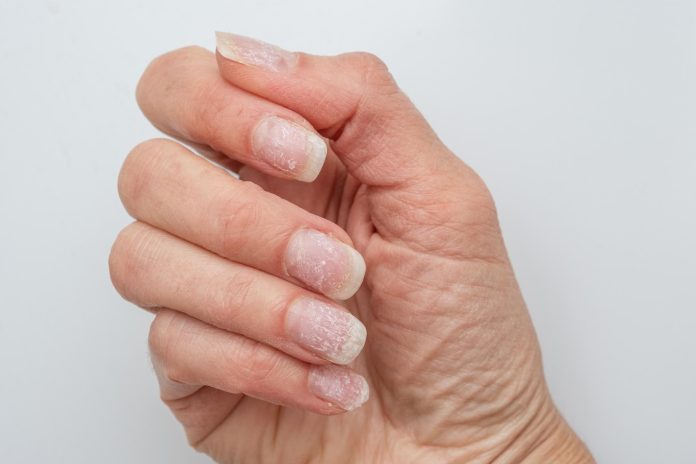
Our nails do not always behave the same way. They may look strong and smooth for a while and then suddenly start peeling, splitting or breaking more easily. In many cases, this does not mean that something serious is wrong. Nail brittleness is common and can be linked to everyday wear and tear, repeated exposure to water, products we use on our hands or minor trauma.
There are also situations in which brittle nails can be a sign of an underlying condition. That is why it is useful to understand what can make nails more fragile and which changes are worth paying attention to.
What does it mean to have brittle nails?
Brittle nails may split, peel or break at the edges. Fine ridges or separation of the superficial layers of the nail can also occur.
Nail brittleness can result from factors that affect either how the nail is formed or the nail plate after it has already formed. Research has identified factors such as dehydration of the nail plate, repeated exposure to water and chemicals, trauma, and certain dermatological or systemic conditions.
Can too much water play a role?
It may sound counterintuitive, but repeated cycles of getting wet and drying out can affect the structure of the nail. Repeated hydration and dehydration can contribute to separation of the superficial layers, making nails more prone to peeling and breaking.
This can be particularly relevant for people whose hands are frequently exposed to water or cleaning products.
What about manicures and minor trauma?
The way we care for our nails can also affect their strength. Aggressive filing, nail biting or using nails as tools can cause mechanical damage.
Artificial nails and some gel or acrylic manicure practices can also leave natural nails thinner, drier or more brittle, particularly when they are applied and removed repeatedly. The American Academy of Dermatology notes that repeated use and removal of artificial nails can damage the natural nail plate.
Could nutrition be involved?
Nutrition can matter for nail health, but not every brittle nail should automatically be attributed to a nutritional deficiency.
Certain nutritional deficiencies and systemic conditions have been associated with nail changes. However, brittle nails have many possible causes and are often related to everyday or environmental factors.
For that reason, taking supplements without identifying an actual nutritional need is not a general solution for brittle nails.
What can we do every day?
A few simple habits can help reduce stress on the nails:
- Wear gloves when washing dishes or using cleaning products.
- Moisturize your hands, nails and the skin around them regularly.
- Keep nails at a practical length and file rough edges.
- Avoid using your nails to open objects or scrape surfaces.
- Avoid biting or picking at your nails and cuticles.
- If your nails are already damaged, consider taking a break from artificial nails or particularly aggressive manicures.
The American Academy of Dermatology and the NHS recommend, among other measures, protecting nails from prolonged water exposure and cleaning products, moisturizing regularly and avoiding habits that damage the nail plate.
When should a dermatologist check your nails?
Brittle nails on their own usually do not mean that something serious is wrong. However, medical assessment is worth considering when the change persists, appears without an obvious reason or is accompanied by other signs.
It is a good idea to seek medical advice if a nail:
- changes significantly in color or shape,
- becomes thick or starts to crumble,
- lifts away from the nail bed,
- becomes painful or develops redness and swelling around it,
- develops persistent changes that do not improve.
For example, a fungal nail infection can make a nail brittle, causing it to crack or crumble, often together with other changes such as discoloration or thickening.
Rather than trying to diagnose the cause from appearance alone, persistent or unusual nail changes can be assessed by a dermatologist. Testing may be needed in some cases.
What to remember
Nails becoming more fragile from time to time does not necessarily mean there is an underlying health problem. Frequent water exposure, cleaning products, minor trauma and certain nail-care practices can all affect nail strength.
If brittleness persists or comes with changes in color, shape, thickness or the surrounding skin, however, professional assessment is worth considering.