Lead exposure is difficult to prevent partly because it may be invisible. Contaminated dust, soil, water, consumer products and workplaces can look ordinary, while people may have no obvious symptoms. A new World Health Organization feature on Ethiopia’s response offers a practical lesson: finding exposure earlier requires a connected system, not a single test or awareness campaign.
1. Risk is not confined to one setting
WHO describes potential exposure across homes, informal and formal workplaces, recycling activities, consumer products and the wider environment. Used lead-acid batteries, some paints and cosmetics, contaminated soil and dust, and certain cookware are among the possible sources. The important public-health point is that investigators cannot assume there is one universal pathway.
2. Children and pregnancy require particular attention
Children absorb lead more readily than adults, and their developing brains and nervous systems are especially vulnerable. Exposure can affect learning, attention and behaviour. During pregnancy, lead can also threaten fetal brain development. These risks make prevention at the source more important than waiting for unmistakable symptoms.
3. Occupational exposure can travel home
Workers may carry contaminated dust on clothing, shoes, skin or tools. This creates a bridge between workplace controls and household health. Safer collection and recycling systems, protective practices, responsible waste management and environmental controls therefore protect both workers and families.
4. Clinical awareness is the first filter
Lead exposure can be silent or resemble many other conditions. Health professionals need clear guidance on what questions to ask, when testing may be appropriate and how to interpret results in context. Ethiopia is developing national clinical guidance intended to make that first response more consistent.
5. A blood test is a starting point, not the entire answer
A blood lead test can confirm that exposure has occurred, but the result must connect to clinical follow-up and source investigation. Where did the exposure happen? Is the source still present? Could other household or community members be at risk? Without that chain, a laboratory number may help one patient while leaving the next exposure untouched.
6. Laboratory capacity depends on the whole pathway
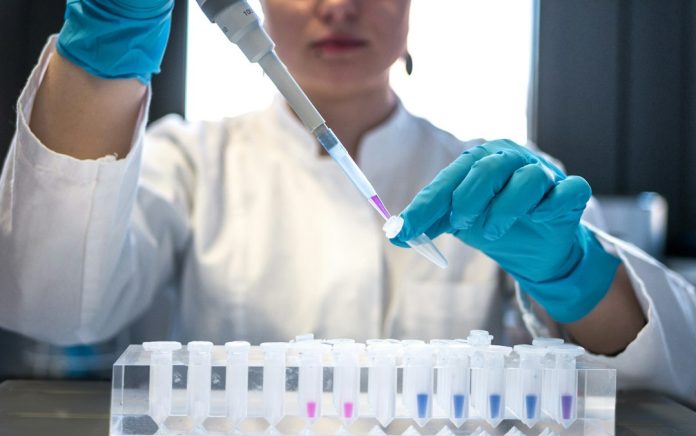
Reliable analysis requires more than equipment. Sample collection, transport, quality control, interpretation, referral and follow-up all matter. WHO’s account of the Ethiopian Public Health Institute highlights the goal of turning isolated testing into a functioning national system that can support both care and prevention.
7. Prevention is necessarily multisectoral
Health agencies cannot solve a problem that also involves products, housing, recycling, labour, waste and environmental standards. The strongest response connects clinical observations and laboratory evidence with regulators, employers, manufacturers, public-health teams and communities.
What this means for families
This is not a reason to self-diagnose. It is a reason to treat possible exposure as an environmental and medical question that deserves professional assessment. People who are concerned about a child, pregnancy, occupational exposure or a known contaminated setting should contact an appropriate health professional or local public-health authority. Testing and follow-up should be guided by local clinical and environmental advice.
Ethiopia’s approach is useful beyond one country because it reframes the problem. Lead exposure becomes visible when health workers recognize the possibility, laboratories can measure it, public-health teams trace the source, and authorities have the ability to reduce that source. Prevention succeeds when those steps operate as one system.
Primary source: World Health Organization, “Making the invisible visible: Ethiopia steps up action to prevent lead exposure”, 22 October 2026.
Featured photo: Julia Koblitz / Unsplash. The image is illustrative.