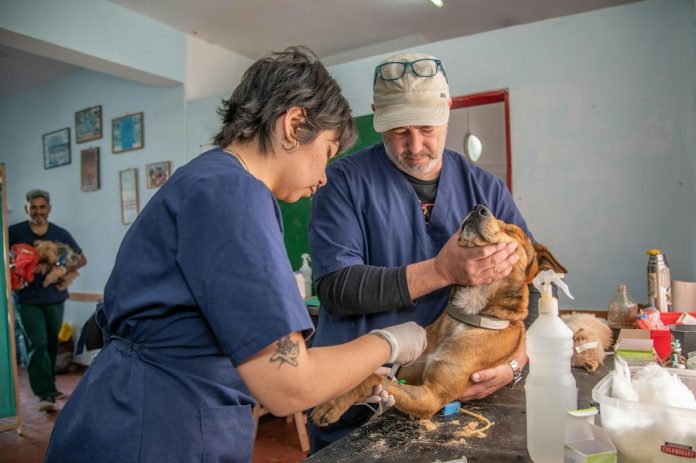
A new infection does not always begin in a clinic. It may first appear in wildlife, livestock, pets, food systems or changing environments. That is the central idea behind One Health: human health cannot be separated neatly from the health of animals, plants and the places we share.
The approach is not a new medical specialty or a replacement for ordinary healthcare. It is a way of organizing expertise. Doctors, veterinarians, epidemiologists, laboratory scientists, ecologists, agricultural professionals and public-health teams share information and coordinate when a health problem crosses traditional boundaries.
Why these connections matter
People interact with animals and ecosystems every day. Pets live in our homes, livestock support food systems, wildlife shares changing habitats with expanding communities, and international travel moves people and goods across borders quickly. Climate and land-use changes can also alter where mosquitoes, ticks and other disease vectors are able to survive.
These links create benefits, but they can also create routes for health threats. Zoonotic diseases are infections that can spread between animals and people. The U.S. Centers for Disease Control and Prevention lists examples including rabies, salmonella infection, West Nile virus infection, Lyme disease and ringworm. The existence of these diseases does not mean that contact with animals is inherently unsafe. It means prevention works best when human and animal health systems communicate.
It is broader than infectious disease
One Health also covers antimicrobial resistance, food safety, environmental contamination and health threats affected by climate or land use. Resistant germs can move through healthcare settings, communities, food systems and the environment. Contaminated water can affect both people and animals. Disease among food-producing animals can disrupt nutrition, livelihoods and supply chains.
Animals may sometimes provide an early warning that a hazard is circulating. The CDC notes that bird deaths can precede human cases of West Nile virus in the same area. Surveillance across species can therefore help public-health teams notice a pattern sooner than if each sector looks only at its own data.
What collaboration looks like
In practice, One Health depends on communication, coordination and shared surveillance. A veterinarian who notices an unusual cluster of illness, a laboratory that identifies a resistant organism and a public-health department monitoring human cases may each hold one part of the picture. Bringing those observations together can support faster investigation and more targeted prevention.
The approach can also involve policymakers, agriculture agencies, wildlife experts, water authorities, community organizations and pet owners. No single profession can manage every issue at the human–animal–environment interface.
What it means for everyday life
For individuals, One Health is not a reason for alarm. It supports familiar precautions: keep pet vaccinations and veterinary care current, wash hands after handling animals or their waste, prepare food safely, avoid unnecessary antibiotic use and follow local guidance about mosquitoes, ticks, wildlife and unsafe water.
It also reinforces an important point about antibiotics: medicines should be used only when medically or veterinarily appropriate and exactly as prescribed. Antimicrobial resistance is a shared problem, but personal treatment decisions still belong with a qualified healthcare or veterinary professional.
The useful takeaway
One Health changes the question from “Is this a human problem, an animal problem or an environmental problem?” to “How are these systems interacting?” That broader view can improve outbreak prevention, food safety, antimicrobial-resistance control and global health security.
This article provides general health information and does not replace medical or veterinary advice. For the underlying public-health framework, see the CDC’s overview of One Health.