

Countries continued to reduce tuberculosis deaths in 2025, but an estimated 2.2 million people who developed the disease were not diagnosed or formally reported, according to the World Health Organization’s latest global update.
WHO estimates that 10.6 million people developed tuberculosis in 2025 and 1.1 million died from it. The number of deaths was 35% lower than in 2015, showing that prevention, diagnosis and treatment programmes are having a measurable effect. At the same time, the figures underline how far the world remains from ending TB as a public-health threat.
More people were diagnosed, but the gap remains large
Health services diagnosed and reported 8.4 million people with TB in 2025. That leaves a gap of roughly 2.2 million people who may not have reached care, may have been diagnosed outside reporting systems, or may never have received a diagnosis.
This gap matters because untreated pulmonary TB can continue to spread, while delays can make illness more severe. It is not a single-country problem: access to testing, local laboratory capacity, health-system funding, stigma and the cost of reaching care all influence whether someone is diagnosed promptly.
Rapid testing is still not reaching everyone
WHO reported that 59% of people newly diagnosed with TB received a rapid diagnostic test. These tests can identify TB more quickly than older methods and, in many settings, can also provide early information about resistance to key medicines. Expanding their use can shorten the path from symptoms to appropriate treatment.
Drug-resistant TB remains a particular concern. An estimated 370,000 people developed rifampicin-resistant disease in 2025, but only 42% received treatment. The gap reflects the need for reliable laboratory networks, access to recommended medicine regimens and support that helps patients complete care.
Domestic investment increased
Countries increased domestic funding for TB services by 14%, to US$5.6 billion. WHO described this as an important response at a time when external health financing faces pressure. However, the total resources available remain below the level needed for prevention, diagnosis, treatment and research.
For individuals, the central message is practical rather than alarming: a cough that persists, unexplained weight loss, fever, night sweats or known exposure should prompt medical advice, particularly in people at higher risk. Symptoms alone cannot diagnose TB, and testing should follow local clinical guidance.
The figures come from the World Health Organization’s November 12, 2026 update. This article is for general information and does not replace assessment by a qualified health professional.
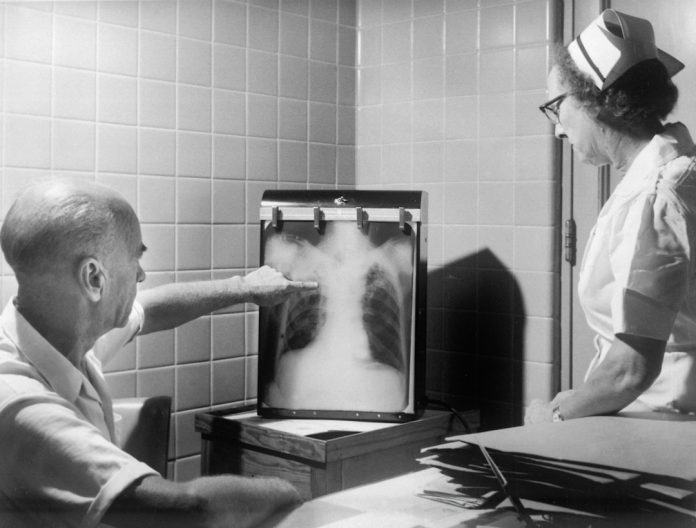
Featured image: clinicians reviewing a tuberculosis chest X-ray; historical public-health photograph — CDC / Unsplash.














