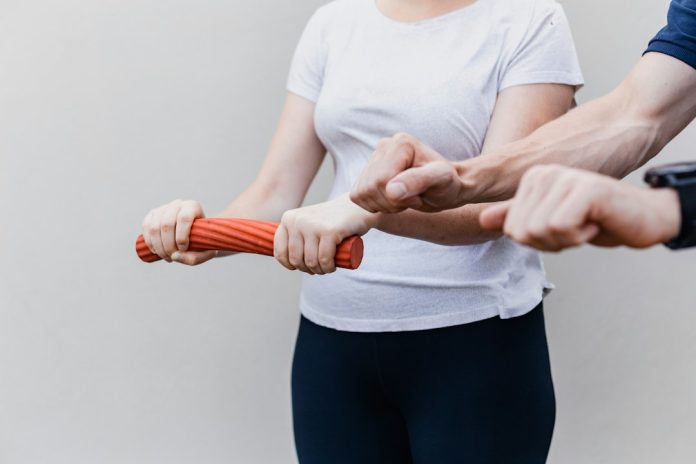
Recovery after a stroke is often measured during scheduled clinic visits. Therapists use established tests to assess strength, coordination and the ability to complete specific movements. These assessments are essential, but they provide only a snapshot. They may miss small changes and do not always show how much a person uses the affected arm during everyday life.
An NIH-funded research team has developed a digital arm performance scale, or DAPS, designed to connect those two worlds. The system uses data from wrist-worn accelerometers and machine learning to estimate arm performance from movement patterns collected outside the clinic. The study was published in Science Translational Medicine on September 30, 2026.
How the digital scale was built
The researchers combined two kinds of information. One came from clinical tests of arm function. The other came from accelerometers worn on the wrists while participants went about daily activities. These sensors measured movement in three dimensions over thousands of hours.
The development dataset included 61 people who had experienced a stroke within the previous six months and 75 people without a stroke. Machine-learning methods were used to identify relationships between everyday movement and performance on the clinical assessments.
The goal was not simply to count steps or record whether the arm moved. DAPS was designed to capture patterns that reflected how well the arm was functioning. Among the participants whose data was used to create the scale, it tracked improvement in a way that was comparable with the clinical tests.
Testing the approach in a second group
The researchers also evaluated the scale in 79 people who had experienced a stroke more than six months earlier. DAPS again showed that it could track differences in arm performance. It could distinguish people recovering from stroke from participants without a stroke using only data from everyday movement.
One notable result was its ability to detect differences even when a patient reached the highest score on a standard clinical test. A ceiling score can make further progress difficult to measure. Continuous real-world movement data may reveal changes that a short clinic assessment cannot capture.
Why a more sensitive measure could matter
More frequent measurement could help clinicians see whether a rehabilitation plan is producing the intended changes. It could also give patients a clearer picture of progress between appointments. In research, a sensitive digital measure may make it easier to test new therapies because smaller changes can be detected with fewer participants.
The team simulated how DAPS might have affected two previous trials of stroke-recovery treatments. Their analysis suggested that the digital measure could have identified treatment effects with substantially smaller samples. That finding is encouraging, but it is a simulation rather than a completed trial designed around DAPS from the outset.
What the study does not show
The device is a measurement tool, not a treatment. Wearing a sensor does not itself improve recovery, and the study does not establish that DAPS should replace clinical assessment. The system links movement patterns with functional scores; it does not explain every reason a person may use an arm more or less on a given day.
Real-world use also raises practical questions. Sensors must be worn consistently, data quality has to be monitored, and algorithms need validation across different populations, levels of impairment and living situations. Privacy and access matter as well. A digital tool is useful only if patients understand how their data will be collected, stored and interpreted.
What patients should know
Stroke rehabilitation is individualized. People should not change exercises or therapy plans based on data from a consumer wearable without guidance from their rehabilitation team. Sudden new weakness, numbness, facial drooping, speech difficulty, severe headache or loss of balance can be warning signs of a new stroke and require emergency medical attention.
The study points toward a future in which clinic tests and daily-life measurements complement each other. If further research confirms the findings, wrist-worn sensors could help make recovery tracking more continuous, more personalized and more responsive to the changes that matter outside the treatment room.
Sources: National Institutes of Health research summary and the study “Assessment of upper-limb motor recovery after stroke using a wrist-worn accelerometer digital biomarker,” published in Science Translational Medicine (2026; DOI: 10.1126/scitranslmed.adw3644).
This article is for general information and does not replace medical advice, diagnosis or treatment.
Image: Sincerely Media / Unsplash License.