

Bone marrow is one of the body’s most important immune environments. It is where many blood cells develop and where long-lived plasma cells can remain after an infection or vaccination, continuing to produce antibodies. Studying that environment in people is difficult, which is why researchers have been working on laboratory systems that reproduce some of its key features.
An NIH-supported research team has now described a miniaturized “bone marrow-on-a-chip” model designed to examine how antibody-producing plasma cells migrate, mature and survive. The work is a research platform, not a treatment. Its value lies in giving scientists a more controlled way to watch immune-cell behaviour that is hard to observe directly inside the human body.
What the model is trying to reproduce
Traditional cell cultures usually place cells on a flat surface. Bone marrow, by contrast, is a three-dimensional tissue with physical structure, signalling molecules and several interacting cell types. A chip model uses small channels and engineered tissue environments to recreate selected parts of that setting.
According to the NIH summary, the researchers built on a human lymphoid organoid system using B cells obtained from tonsil tissue and blood sources. The resulting platform is intended to model the stages through which antibody-producing cells move and persist within a marrow-like environment.
This does not mean the device contains a complete, fully functioning human immune system. It represents chosen components under controlled laboratory conditions. That distinction matters when interpreting any result.
Why researchers are interested
Long-lived plasma cells help sustain antibody responses. Understanding where they settle, what signals support them and why some survive longer than others could improve basic knowledge about immunity. A model that allows repeated observation may help researchers compare conditions, test biological mechanisms and identify questions worth taking into more complex studies.
It could also make early laboratory work more reproducible. Researchers can adjust one factor at a time, observe how cells respond and repeat the experiment. That is often difficult with tissue samples collected from people at a single moment.
What the study does not prove
The findings do not show that the chip can predict how every person will respond to an infection, vaccine or immune disorder. They do not establish a new diagnostic test, drug or clinical recommendation. Laboratory models can miss the influence of hormones, circulation, other organs, age, genetics and the wider immune system.
Results from a chip therefore need confirmation in additional models and, where appropriate, carefully designed human studies. Even a sophisticated human-cell platform is still an approximation of biology.
How to read “human-based model” claims
The phrase can be misunderstood. A model built from human cells may be more directly relevant to human biology than some animal-only systems, but relevance is not the same as clinical validation. The most useful questions are:
- Which cell types and tissue features are actually included?
- Which parts of the real organ are absent?
- Can other laboratories reproduce the findings?
- Have the results been compared with human samples or clinical outcomes?
- Is the claim about mechanism, prediction or treatment?
The current work is best viewed as a mechanistic research tool. It may help scientists ask better questions about plasma-cell biology and the immune environment of bone marrow. It should not be used to make decisions about personal treatment or immunity.
Evidence note: This article is based on an official National Institutes of Health research summary dated September 11, 2026 and the linked peer-reviewed study. The evidence concerns a laboratory model. It does not demonstrate safety or effectiveness in patients.
Primary source: National Institutes of Health
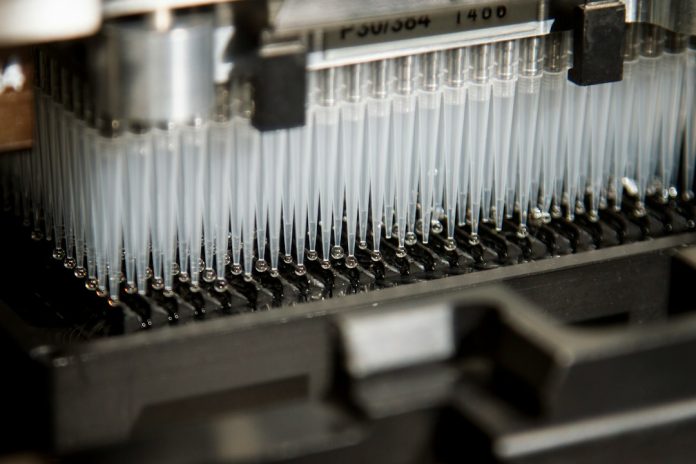
Illustrative image: National Cancer Institute via Unsplash.














