

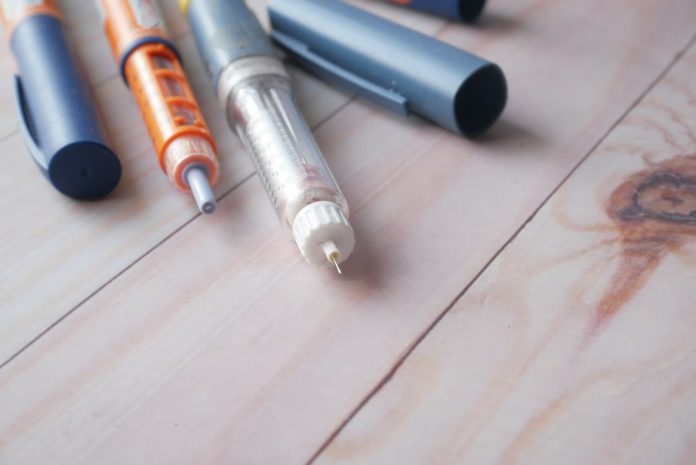
Used needles, lancets, auto-injectors and other sharps need a different disposal routine from ordinary household waste. The safest habit is simple: prepare the container before the injection and put the sharp into it immediately after use.
1. Have the right container ready
Use a purpose-built, puncture-resistant sharps container whenever one is available. It should close securely, stay upright and resist leaks. If an approved container is temporarily unavailable, ask a pharmacist or local health authority what rigid, heavy-duty household container is accepted in your area. A thin drinks bottle, glass jar or open bin is not a safe substitute.
2. Dispose of the sharp immediately
Do not leave a used needle on a tray, bedside table or bathroom counter “for later.” Immediate disposal reduces the chance that a child, visitor, cleaner or pet encounters a loose sharp. Keep the container within reach of the person using the device, but out of reach of children and animals.
3. Do not improvise with the needle
Do not bend, break or remove a needle by hand. Do not recap a needle used by another person. These actions bring fingers close to the point and can cause an accidental needlestick. Follow the device manufacturer’s instructions for any built-in safety mechanism or compatible needle-removal device.
4. Keep sharps out of rubbish and recycling
Loose sharps should never go into general waste, recycling or the toilet. They can injure family members and waste-handling staff, and recycling systems are not designed to process them. The closed container itself must also be handled according to the disposal rules where you live.
5. Stop before the container is overfilled
Overfilling increases the risk of a puncture while adding the next item or closing the lid. The US Food and Drug Administration advises closing a container when it is about three-quarters full. Treat that as a practical warning point, then follow the fill line and instructions printed on your container.
6. Plan the final disposal route
Rules vary by country and municipality. Pharmacies, clinics, supervised collection points or specialist waste services may accept sealed sharps containers, but availability differs. Check the local route before the container becomes full; do not assume that it can be placed in household waste.
7. Include travel and incident planning
Carry a small travel sharps container when away from home. If an accidental needlestick occurs, wash the area with soap and water and contact a healthcare professional promptly for an individual risk assessment. Do not squeeze, cut or scrub the wound.
A useful home check: the container is present before treatment starts, is labelled and upright, cannot be reached by children or pets, and has a known local disposal route.
This article is general health information and does not replace advice from a clinician, pharmacist or local waste authority. Disposal law and collection services differ by location.














