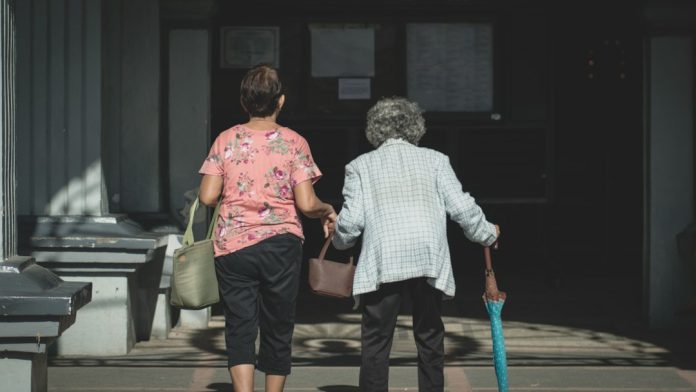
Europe is getting older, but the public-health challenge is not simply how long people live. It is how many of those years are lived with health, independence and meaningful participation.
That distinction is at the centre of a new regional strategy adopted unanimously by the 53 Member States of the World Health Organization’s European Region. The strategy, Ageing is living, covers 2026–2030 and asks countries to act across the whole life course rather than waiting until illness or disability appears in later life.
Why the strategy matters now
WHO/Europe estimates that by 2050, 27% of the Region’s population will be over 65. Longer lives are a major achievement, but longevity is not evenly matched by healthy life expectancy. Women generally live longer than men in the Region, yet WHO reports that they spend a smaller proportion of their lives in good health: 81.3%, compared with 83.5% for men.
Those figures do not mean ageing itself is a disease. They show that the conditions in which people grow up, work, move, eat, receive care and stay socially connected shape health across decades. The strategy therefore treats healthy ageing as a shared responsibility involving health services, housing, transport, workplaces, communities and social protection.
Four priorities for implementation
A companion implementation document describes four areas through which WHO/Europe plans to support countries:
- Leadership capacity: helping governments and institutions coordinate policy across sectors rather than isolating ageing within specialist services.
- Better investment: directing resources toward interventions that preserve function, prevent avoidable decline and make care more accessible.
- Innovation that can scale: identifying useful technologies and service models while requiring evidence that they are safe, effective and equitable.
- Data and intelligence: improving country profiles and dashboards so progress can be measured rather than assumed.
The strategy combines two time horizons. One focuses on improving the lives of older adults today, including care closer to home and practical support for families and carers. The other aims to help younger generations enter later life in better health by addressing risks earlier.
What “care closer to home” means
For many people, healthy ageing depends on ordinary services working together: primary care that detects problems early, rehabilitation after illness or injury, medication review, vaccination, vision and hearing support, fall prevention, mental-health care and social services that reduce isolation.
Moving care closer to home does not mean leaving families to manage alone. It means designing coordinated services around the person, with clear referral pathways and support for unpaid carers. Hospital treatment remains essential when needed, but it should not be the only doorway into care.
Ageism is also a health issue
WHO’s strategy explicitly includes tackling ageism. Stereotypes can affect employment, clinical decisions, access to technology and whether symptoms are taken seriously. They can also discourage older people from seeking help or participating in community life.
Healthy ageing policy therefore needs to protect autonomy and include older adults in decisions that affect them. The goal is not to present every older person as equally fit or equally frail; needs vary widely, and services should respond to function and preference rather than age alone.
What individuals can take from the plan
The strategy is aimed primarily at governments and health systems, not at prescribing a single lifestyle formula. Still, its life-course approach supports familiar, evidence-based foundations: regular movement adapted to ability, balanced nutrition, adequate sleep, vaccination, social connection and timely management of blood pressure, diabetes, hearing, vision and other health conditions.
No one behaviour guarantees healthy ageing, and personal choices are constrained by income, housing, work and access to care. That is precisely why WHO frames ageing as a policy challenge as well as an individual one.
What happens next
Implementation begins now. WHO/Europe says country profiles and a Healthy Ageing Intelligence Dashboard will support planning and monitoring. The important test will be whether countries translate the framework into funded services, measurable goals and better day-to-day experiences for older people and carers.
Source: WHO Regional Office for Europe, 30 October 2026; implementation approaches for healthy ageing.