

A new global assessment from the World Health Organization shows how little progress has been made in helping teenagers move more. The report, published on 4 November 2026, analyses 389 population-based surveys from 140 countries and territories, covering more than 3.2 million adolescents aged 11–17.
Its headline finding is stark: in 2025, only 14% of adolescents reported at least 60 minutes of moderate-to-vigorous physical activity on all seven days of the previous week. One in four reported no day at all meeting that threshold.
A global pattern that has barely shifted
WHO compared the latest results with data going back to 2010. Global activity levels changed little over that period, and no country is currently on track to achieve the agreed target of a 15% relative reduction in physical inactivity by 2030.
This does not mean every teenager is inactive in the same way. The report describes substantial differences between countries, between boys and girls, and between groups with different access to safe and affordable places to be active. Girls were consistently less active than boys across the data.
What the 60-minute benchmark means
The daily benchmark includes more than organised sport. Brisk walking, cycling, active games, physical education, dance and recreational exercise can all contribute when they raise the heart rate and require moderate or vigorous effort.
For families and schools, that distinction matters. A young person does not need elite training or an expensive club membership to benefit from movement. The practical challenge is creating repeated opportunities that are safe, enjoyable and realistic within everyday routines.
Why counting days is useful—but incomplete
The survey measure asks adolescents to recall how many days in the previous week included at least 60 minutes of activity. It is valuable for comparing large populations, but it is not a clinical test and it cannot capture every detail of intensity, muscle-strengthening activity, disability, local environment or seasonal change.
Self-reported data can also be affected by memory and interpretation. The report should therefore be read as a population-level signal, not as a diagnosis of any individual teenager.
The gender gap is an access problem too
Lower activity among girls cannot be explained by motivation alone. Safety, social expectations, the design of sports programmes, cost, transport, changing facilities and whether activities feel welcoming can all influence participation.
WHO calls for particular attention to the least active adolescents and to inequalities that restrict opportunity. That means schools, municipalities, sports organisations and health systems need to look beyond general advice and examine who is being left out.
What families can do without turning movement into pressure
Parents can start by asking what kind of movement a teenager actually enjoys. Walking with friends, cycling, swimming, team sports, martial arts, dancing or short home sessions may all be more sustainable than a plan chosen only by adults.
Small environmental changes can help: protecting time for activity, making active travel possible when safe, reducing long uninterrupted periods of sitting and encouraging participation without focusing on weight or appearance. The aim is a supportive routine, not punishment or competition.
What schools and communities need to measure
Schools can track whether physical education is delivered consistently, whether facilities are accessible, and whether students who are less confident have meaningful options. Communities can examine safe routes, lighting, cost, transport and access for adolescents with disabilities.
WHO’s report also stresses the need for stronger data. National averages can hide large local gaps, so monitoring should be able to show differences by sex, age, disability, socioeconomic position and geography where possible.
The public-health takeaway
The findings do not support a single campaign or a one-size-fits-all prescription. They show that physical activity is shaped by systems as much as by individual choice. Progress will require coordinated work across education, transport, urban planning, sport and health.
For clinicians and families, the report is a prompt to discuss movement in a practical and non-stigmatising way. For decision-makers, it is a reminder that safe, affordable and enjoyable opportunities must be designed into daily life if global targets are to become realistic.
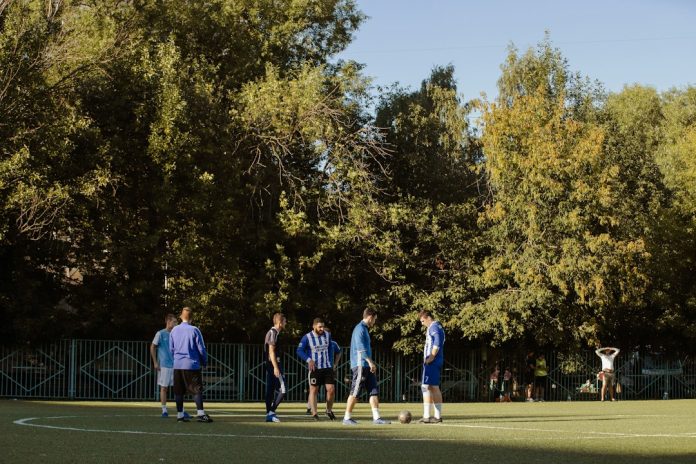
Editorial image: Max Titov via Unsplash, used under the Unsplash License.














