Europe’s 2026 chikungunya season offers a useful lesson in how to read infectious-disease surveillance without turning case counts into either panic or false reassurance. In its 20 November update, the European Centre for Disease Prevention and Control (ECDC) reported 216 locally acquired cases in France and one in Italy, with the data current to 18 November.
What “locally acquired” means
A locally acquired case indicates that infection was probably transmitted within the reporting area, rather than linked to travel in a country where chikungunya is established. That distinction matters because it can signal that competent mosquitoes, suitable weather and an infected person overlapped long enough for local transmission to occur.
It does not mean that transmission is occurring everywhere in a country. France’s 216 cases were distributed across 31 clusters. ECDC described ten clusters as active in the latest report, including the two largest in Prayssac, with 40 cases, and Cavalaire-sur-Mer, with 35. Italy had reported one locally acquired case in Rome and no new local cases in the week covered by the update.
Why the weekly numbers can change
Surveillance figures are snapshots. A case may be added after laboratory confirmation, linked to a cluster only after an epidemiological investigation, or reclassified when travel history becomes clearer. The reporting date is therefore not the same as the day a person became ill.
Cluster status also needs context. “Active” means recent transmission may still be relevant to public-health action; it is not a prediction that a cluster will necessarily expand. Conversely, a week with few new cases does not erase the need for mosquito control while environmental conditions still support Aedes activity.
What symptoms deserve attention
Chikungunya commonly causes sudden fever and significant joint pain. Headache, muscle pain, rash and fatigue may also occur. Symptoms overlap with other infections, including dengue, so a symptom list cannot establish the diagnosis. Laboratory and clinical assessment matter, especially for people who recently visited or live near an area where local transmission has been identified.
Older adults, newborns and people with underlying medical conditions can be at greater risk of complications. Anyone with severe symptoms, persistent fever, signs of dehydration, breathing difficulty, confusion, unusual bleeding, or worsening illness should seek prompt medical care. Because dengue can look similar, people with a compatible illness should ask a clinician before using aspirin or anti-inflammatory medicines.
Prevention remains practical and local
There is no single household measure that eliminates risk, but several small actions work together: use an appropriate insect repellent as directed, wear clothing that covers exposed skin when mosquitoes are active, use window screens where available, and remove standing water from containers around homes and workplaces. Public-health teams may add targeted mosquito control and case-finding around clusters.
The most accurate reading of the 2026 report is therefore measured. Local transmission was documented in parts of Europe, but it was concentrated in defined clusters rather than spread uniformly. Weekly surveillance helps authorities identify where action is needed and helps residents interpret location-specific advice.
Primary source: ECDC seasonal chikungunya surveillance, 20 November 2026.
Medical note: This article is for general information and does not replace individual diagnosis or treatment advice.
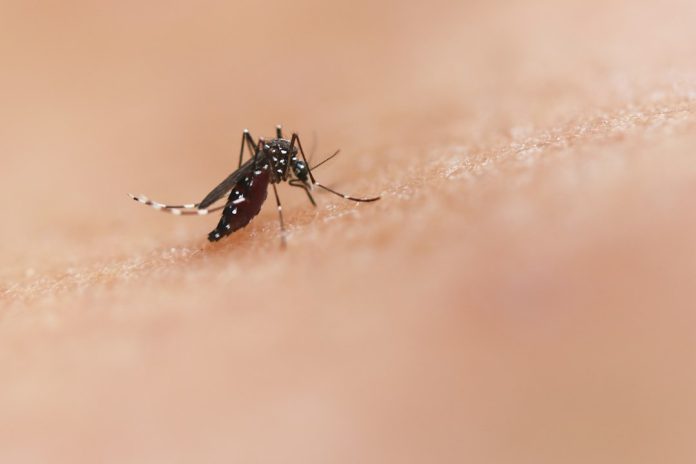
Photo: National Institute of Allergy and Infectious Diseases / Unsplash. Image depicts an Aedes mosquito bite.